Saturday, 8 July 2023

Fairytale creatures at Playful Learning 2023


An object made of paper, card, pipecleaners and more. Looks like an upside down cup with wiring hair and fierce eyebrows

I ran a workshop at the Playful Learning Conference in Leicester last week where we made new (or forgotten) fairy tale creatures representing aspects of play or playfulness. Participants wrote short bios and what they'd need to thrive and multiply into the world. The same things required to make these creatures thrive could equally be seen as ways to enable play / playfulness to thrive too! When I have time / energy I'll list some of the creatures (the photo above is Jing, from Alex's twitter - didn't want to embed just in case Twitter completely explodes shortly).

The ways participants thought they could allow their creatures to thrive are (in brief):

  • Collaboration
  • Appreciation of fun
  • Getting into nature more
  • Accepting creatures (people) as they are
  • Making room for play
  • Undermining barriers to play
  • Bringing together creative people
  • Looking towards allies for support
  • "Yes and..." to extend play not shut it down
  • Purpose
  • Permission to pause for a while
  • Sufficient mental and physical space
  • To be able to move freely mentally and physically
  • Support for faciliators
  • A sense of belonging
  • Acknowleding emotions
  • Enabling autonomy
  • An active community
  • A willingness to question and to adapt
  • Acceptance that we need people (the invented creature!) who encourage play and that a visit from them is a gift
  • Universities should build people who encourage play into their wellbeing plans
  • Curious people / natures
  • Embracing fun (laughter, giggles, chuckles and guffaws!)
  • Time - to prioritise creative, playful thinking. But also to recharge.

... do these sound familiar? I think they sound like valid ways to help us all play more, not just the fairy tale creatures they created :)


Wednesday, 3 May 2023

Pedagogy postcards exercise at LILAC23

 I did a playful postcard exercise at LILAC this year, asking people to write their top tips for teaching (or enabling) information literacy development in others on a postcard and posting it in a little red postbox! Those who left an address on a sticky label had a randomly selected postcard sent out to them. This is what they said, plus some comments and explanation from me :) 


Pedagogy Postcards for Practitioners, Andrew Walsh, LILAC 23.

Thank you everyone who submitted a tip! This PDF will list the tips (in italics), add a little commentary about the tips, plus give a very brief outline about the approach taken with this postcard exercise. Those of you receiving this PDF after submitting their email addresses via the QR code, I’ll delete them within the next few weeks.

The tips / commentary

The first few focus on something that librarians often struggle with. We might only see students once, probably for a relatively short amount of time, so there is a temptation to try and tell them “all the things”! I worry that this also tends to combine with an element of vocational awe where we see ourselves as the only people who can save students from poor information literacy and overinflate our importance (see Fobazi Ettarh’s work, e.g. VOCATIONAL AWE AND LIBRARIANSHIP: THE LIES WE TELL OURSELVES). Bombarding students with content isn’t good pedagogical practice though, as these tips suggest!

Bite sized resources available at the point of need. I record short-ish videos on different subjects and make them available to students (who study 100% online).

Don’t sacrifice understanding and deep learning in order to cover content – learning one thing well is better than learning lots superficially. (P.S. Read bell hooks!)

Less is more 😊 We don’t need to tell everything we know about IL in each lesson, people will be overwhelmed. Pick your highlights (learning outcomes) and stick to them. (Hugs from Bettina, Norway.)

I love the pedagogy hinted at behind these next few, but again many librarians struggle with this! It’s often tempting to think that the way we think an information literacy related task should be approached (e.g. searching for information for an assignment) is the best way of doing it. We’re the experts, so everyone should copy our examples. In practice, students are concerned with different things, have varying demands on their time and attention, and need to build strategies that work for them. They may care about different learning outcomes to those that we had in mind at the start, and these may even emerge, or change, during a session. These tips all try to shift the power dynamic towards the student, helping to give them ownership and an element of control, so we meet the students’ needs, not our own pre-determined outcomes. (This is part of the reason I personally take a playful learning approach!)

Give students ownership of their own learning – how can you involve them in co-creating material or learning activities?

Engage your students as collaborators / give them the power to steer their own learning directions & needs by checking their aims before you start teaching (LC Chung)

Tell students at the beginning of sessions that the goal is for them to learn rather than you to teach, so they should be encouraged to ask questions and lead / direct the conversation as they wish 😊

Ask student how they manage and organise information. What is their research information process. (Paul Newnham)

These next few are a mixture of slightly different things, but are all about contextualising the content. Information literacy varies by context and is often difficult for people to transfer from one setting to another – this contextualisation helps embed learning more effectively. It’s not a “library” session, it’s one relevant to their study, work, life, whatever… but a note of caution, be careful using pop-culture references unless you are genuinely up to date. Please don’t think you’re cool dropping references to TV shows that aired before your students were born (or from shows that didn’t air in countries that your students are from). :D 

Start with where your students are at… if they use Google Scholar – show them Google Scholar! If they use TikTok, demo the issues with that (Relete)

Use concrete, pop-culture examples and references = (1) Instant likeability factor (2) more engaging & though provoking (Anne-Lise Harding, House of Commons Library)

Making teaching relatable to your audience. They’ll be able to understand a real life example if its something they do / see every day.

Take the student’s discipline into account. Tie IL skills to a current assignment / theses / pm the students are working on to make it more relevant to them.

I like to use analogies and metaphors to explain things during IL sessions. Examples that relate to everyday activities / experiences.

Connect to what the student is working on and what problems they encounter.

Interactive suggestions cropped up several times in the tips below, but also in many of the other tips. I’ve written and spoken widely on Active Learning and playful learning that match these ideas, but lots of other teaching approaches also match it! These approaches can make it easier to build on the previous knowledge of students and avoid the hideous “banking model” of education (see Paulo Freire, particularly “Pedagogy of the Oppressed”). As a bonus, it can make it much more fun for you and your learners… and if you’re having fun you’re likely to do a much better job!  

Make your IL sessions interactive. Games, both online and physical make the sessions fun for you and the students and enhance engagement and motivation.

Ask learners to search for info online. E.g. “find an industry report on a particular company”. Next use this to springboard discussion on issues of searching for info online. I then follow this up with previous learners comments on this to encourage peer learning and engage the current group.

Connect your teaching to your audience’s needs and their context. Have fun, make it interactive and remember: often, less is more. Quality over quantity 😊

Matching language to meet your audience, which is where I try to avoid getting into arguments over what information literacy should be called! But that said, information literacy is a great term (IMHO) for us to use when talking about these things with other librarians. That doesn’t mean it’s the best term to use with your learners (or in Higher Education, your lecturers, higher management, etc.) – you can fit the concepts within whatever language makes sense to them. Use library jargon (like information literacy) with other librarians as it helps us be clear what we mean, but use the language of your audience to explain stuff to them.

Don’t call it information literacy or if you do, explain what that is in terms your audience will understand. i.e. what it means in their terms / vocabulary. “Info lit” is too librarian focussed.

Check your use of language and jargon - don’t assume that others will understand the terms and acronyms that you use every day.

Think about language and terminology! Sometimes, academics and students are a bit bewildered by what is meant by “information literacy” but if we try to speak their language (talking about research, articles, searching and so on it becomes easier to communicate) (Hope)

I love how these next two mention preparation from different angles! It’s also something that lots of librarians struggle with – teaching preparation for many people focusses on creating “perfect searches” that as Maria says, are fake… and to be honest, then get confusing to learners when they try to replicate them. Preparation should be around the elements of teaching you intend to use, the activities, the structures, etc that you can then confidently apply. Not the nitty gritty of those pre-prepared examples!

Perfectly practiced demos from a librarian are kinda fake. Make it messy! Hand the reins over to a student or use one of their questions o they know it isn’t prepped. (Maria O’Hara, @Meaohara, Kings College London)

Prepare-prepare-prepare!

These next few are slightly different, but grouped because they are about a mixture of confidence and self-development. Despite many of us having imposter syndrome sitting on our shoulders, telling us we don’t know what we are doing – you do. “You are enough.” There are things we can do to build that confidence, to develop ourselves (like observing others, taking risks, etc) and we should always be learning and developing. That doesn’t mean you are doing badly now! Embrace the fear and do it anyway 😉

Take at least one risk in every session. (Without taking risks your teaching won’t move forward! Don’t be scared) (Nigel Morgan)

Remember… You are an expert. You are enough. Mistakes make you relatable 😊

Talk less and don’t fear the silence!

Have confidence in yourself! Librarians, often introverts, can be a bit daunted by being in front of people, but its important for us to believe in our own expertise. We have a voice and its worth listening to! Good luck, you’re doing great.

Ask more experienced colleagues if you can observe their teaching, even if they are not in the same discipline.

Critical thinking can often be absent in library sessions, but it shouldn’t be! We don’t have absolute answers, but we can help our learners think critically about things and come to their own conclusions. For example, there are lots of frameworks to help people evaluate information sources – if they are used as checklists, they are all bad, if they are used as examples of the type of questions we should be answering and reflecting upon, they can be good. Resist the checklist and embrace the critical questioning!

Instruction should be presented in a value neutral way. There are no “good” and “bad” research tactics. Only more effective and less effective. This can help prevent / reduce embarrassment and open up a genuine dialogue. (Anna Nunn, University of Suffolk)

I always tell students (and others) to check the source. Who is the creator? What is their perspective? What is the purpose of the content the are delivering? (Susan Adkins)

Explore with students the why of things, not just the how.

This one is partly about an approach to teaching, but also about visual literacies. You can tap into different ways of viewing the world and understanding or representing information by using visual approaches – comics / cartoons are one, but there are plenty of others (collage anyone?) out there. Don’t feel hidebound by only using text!

Why not use comics and cartoons for information literacy – works for me!

Bonus tip, but an important one… we don’t teach in a vacuum! This could equally be “feed the IT person biscuits”, especially if you teach in building where you might need support! Anyone that does (or might) support you will appreciate your support in return!

Get to know your admin team and take them cake 😊 (Eva Garcia Grau)


A quick overview for this postcard approach!

I couldn’t be sure if this would work for the delegates in advance, but I got slightly more cards filled in than I was expecting and there are some lovely tips, so I think it did! For an all conference activity like this, 10% of attendees engaging is a good target to aim for and we managed more than that 😊 Using these approaches in a teaching session gets much better engagement, normally everyone would participate.

The postcard activity aimed to draw from the delegates skills and knowledge of teaching information skills, pull them together, group and comment on them (if appropriate), then share them back to the community that contributed.

It draws from a few ideas that I use in my own teaching:

·         Making items tactile so they are attractive to engage with. There is something about print items, especially handmade (I sometimes use items I Letterpress print myself), that naturally invite people to interact with them. A physical postcard tends to be more engaging than asking an equivalent question by circulating a short Google form around everyone (Alke’s work on Tactile Academia is great - https://tactileacademia.com/)

·        Related to tactility is physical representations that give cues towards what we expect – the postcards and the red phone box are directly familiar to UK based people of a certain age, but may also have familiar echoes with younger attendees that might not have directly experienced writing or receiving print postcards. Many people see a postcard and postbox and know what expectations exist around them, the objects themselves guide participants naturally towards doing the activity.

·         Restrictions / constraints can help enable creativity (and engagement with a task like this). The constraint of a small area on the postcard can help people complete the task in a way that a completely open invitation (submit an email or Word document?) does not. An open task can often be harder (and more intimidating) to complete than a constrained or restricted one. (Though I do offer alternatives that are more open, in this case an online form for people that might want to write longer form content, or who might struggle with handwriting a card.)

·         Gifting can invite people to take part in activities – this activity tries to take advantage of that both by the prospect of a small future gift for participants (a postcard delivered to them) AND their own tip turning into a gift for someone else.

 See https://gamesforlibraries.blogspot.com/ for occasional posts from me about library teaching, play, playfulness, workshops and other random bits and pieces. I’m bookable for workshops (online or in person) and sometimes run open workshops too (I’ve just run a few introductory Lego ones).

Andrew Walsh (a.p.walsh@hud.ac.uk / @PlayBrarian)


Thursday, 16 February 2023

Repairing Play: A Black Phenomenology and some reflections


Front cover of the book entitled Repairing Play
Just finished reading "Repairing Play" by Aaron Trammell and I have thoughts! I agree with much that Aaron writes, but disagree with a bit too, which is fair enough... really enjoyed reading it!

More importantly to me, I wonder if the stuff I disagree with comes down to our definitions of play, partly because of my different experiences of play as an autistic person, which is different again to some "mainstream" play theorists?

I have to note as well that the author takes a very US centric approach to this book, which I've tried to forgive, but is undoubtedly niggling me anyway (though he does briefly acknowledge this, so bonus points for this).

So... onto my proper thoughts...

A core part of the book argues that play can be non-consensual, a conflict with traditional play theorists, who say it is always consensual / voluntary. So he says that bullying, torture, police brutality should all count as play... whereas most play theorists would say that they are not. He argues that play is overwhelmingly seen as positive, but it should equally be seen as potentially negative. 

I wonder is this is where I bring my own experiences in a way that is different again? Maybe this is an autistic thing and neurotypical people have a 3rd way that Aaron sees as the norm in play theory?

He counts play as an act that is possible to do to someone else, so the tortured and torturer are playing, the bullied and the bully. I think that he's saying that normally we wouldn't class things like torture as play, but that we should do. I've always seen it slightly differently - the torturer, the bully, the toxic manager, the brutal police officer, can absolutely be playing. Playing as an individual, or as part of a group (that deliberately excludes others), but the person involuntarily suffering as part of it is definitely not playing - to be playing they'd have to be voluntarily taking part, so for example, BDSM would count, but not being involuntarily tortured!

Is this because I'm comfortable that in any activity I recognise that some people may well be playing, some just going through the motions? That the mental state is as important as what is happening at face value? (Or perhaps it's because Aaron comes from game studies, so the game, the structure is the key thing, so can be done to others? I don't know...)

Equally I might be playing in my own head, approaching an activity in a way that makes it play, with others being completely unaware of others - play is much more likely to be an individual activity for me, though the idea that play is inherently social pops up all the time in the play literature.

So this different way of thinking about play is where I think we differ - I wonder if just as his way of thinking about play is heavily influenced by a mixture of game studies and US Black history (and current experiences), so is mine influenced by Autistic play, even though I haven't really thought about it in this way before!

I know this doesn't get onto his idea of repairing play and is probably a bit of a side issue, but it made me wonder about something quite different to the ideas he covers in the book - whether the autistic experience of play is something else again, which I found quite interesting personally! So where I've read between the lines of traditional play theories and assumed one thing (based on my own experiences of play), other people are taking quite a different set of assumptions from it - which Aaron has flagged up by taking a third :)

I really need to find time to dig into neurodivergent ideas of play in adults at some point! Rather than people writing about children's play, which always feels to me like "how do we use play to fix these children" :-S

Friday, 27 January 2023

Online Lego Workshop

Before Christmas I was talking to someone at a Playful Learning event and they were saying how it'd be lovely to have something available to just get a flavour of Lego Serious Play (LSP), some practical examples, a chance to have a go, pointers as to where you might get the Lego from, etc - rather than a full blown LSP course. 

So I've finally got around to setting up a little half day online workshop - maximum 10 people, I'll send a pack of Lego out to people in advance, and we'll run through all those sort of things...

So if you're Lego curious and want to start experimenting with using plastic blocks (but are worried about doing it for the first time). You want to learn the basics in a supportive setting? Sign up to this intro course! We'll post your Lego out in discreet packaging :)

Either follow the link, or (fingers crossed), the form should appear below:

Monday, 21 November 2022

Playful Leadership is... at the PLA meeting November 2022

Playful Leadership is the witches brew in the cauldron of knowledge


We had one of our biannual Playful Learning Association meetings last week in Huddersfield and I did a "Playful Leadership is..." exercise, so sharing the results here for convenience!

One group stamped a "headline" thing about Playful Leadership on one side of the card, then a separate group used that as a prompt for more detail on the other side. (Limited time, space, materials for the "headline" phrase or word, more time and space to write on the back!)

All the cards can be seen in a Google Photos album, but I've also tried to transcribe the text below

Playful Leadership is:


Explanation:

Subversive

It may subvert roles

And structures

And expectations

And processes

And boundaries

And relations

And pedagogy

And play

Dangerous

So run, hide, tell

Projecting play into work

Focusses on the playful aspect of work

Has a strong intent

Projecting = role modelling

Egalitarian

Power balances, mutual respect between leader and team – creates space for creativity.

Everyone takes ownership for the direction.

Choose your own adventure (but how does this work to … illegible)

A state of mind

A Playful Attitude.

Agency – you choose to. You have to want to be playful.

Persuasion – changing the state of mind of others.

Messyness

Messy talk creates opportunity for emerging ideas. (Article was referenced in explanation for messy talk)

Creating space

A chance to breathe, pause, & reflect. Mindfully, socially, and bodily.

Set of symbols – multiple ?, !, &, #

Questioning, inclusive, and staying sharp.

The witches brew in the cauldron of knowledge

“Add some spice” to existing practice.

Stirring up habits and stagnant practice.

The unexpected

Who is it unexpected for? Facilitator needs to be comfortable. Breaks auto pilot of bad teaching.

Unexpected changes in boundaries / changes who is “in charge”?

Striking a pose.

Being unashamed of your authentic self

(ridicule is nothing to be scared of)

Boring (also included stamps of ice creams and flying hearts)

About making the boring not boring.

Because ice cream makes everything not boring.

The BORING button.

Inclusion

Everyone is invited and involved in the play.

The last round I added an extra limiter for, which they struggled with more, limiting the cards to a particular aspect of playful leadership, either Staff Development, Recruitment, or Performance Management:

Playful Leadership (in recruitment) is.. NEW

Eyes

Perspectives

Backgrounds

Creative approaches

Challenges

Possibilities

Playful Leadership (in recruitment) is.. RO(U)LE BREAKING

The power of playfulness is to disrupt, transform, add ambiguity to rules/roles – thus breaking standards.

Emphasising the boundary breaking in recruitment processes exploring rules/roles as dynamic / flexible.

Playful Leadership (in recruitment) is.. CREATIVE ASSESSMENT

Introducing exciting / fun / collaborative / interactive tasks to assess key competencies for role.

Setting expectations that unexpected / imaginative / unique responses are valued.

Encouraging different behaviours to be demonstrated.

[Is it exclusionary to those less playful?]

Playful Leadership (in Performance Management) is.. CORE CONDITIONS (making sense of things, Rogers)

Go back in time and fix the things you didn’t get right the first time. (Note – this was verbally explained that they were playing with the idea of Steve Rogers in the Avengers films.)

Playful Leadership (in Performance Management) is.. STORY

Their career path is their own story.

Every story has a beginning and an end.

Where the person is now, where they want to be / should be.

Performance management is how to get there – see other card! (Note – this refers to “collective imagination card)

Playful Leadership (in Performance Management) is.. COLLECTIVE IMAGINATION

Joint negotiating on the persons destination and steps to get there – see also: STORY

Playful Leadership (in Staff Development) is… Symbols only for this one, mustache, kitten/dog faces, ice cream

Shrug Stamp.


Playful Leadership (in Staff Development) is… Symbols only for this one, 2 mustaches with a question mark in the middle.

Interactively differently. Even during Movember.


Wednesday, 12 October 2022

Playful Leadership Manifesto / Pamphlet


Three playful leadership pamphlets, illustrative of letterpress printed covers
I ran a little Kickstarter recently to sum up my thoughts on Playful Leadership in a way that was playful for me to create - so partly inspired by (17th Century?) manifestos that were short and easy to print on Letterpress printers and distribute.

So the printed version has a letterpress printed cover (inside is from a modern printer though), plus a few A5 prints of play quotes on the letterpress too as a little extra playing about from me.

If anyone is interested in reading the content though, it's available as a PDF now for anyone from my Dropbox. Take a look, see what you think, let me know if you find it a useful way of framing Playful Leadership :)

Saturday, 30 July 2022

What play at work looks like?


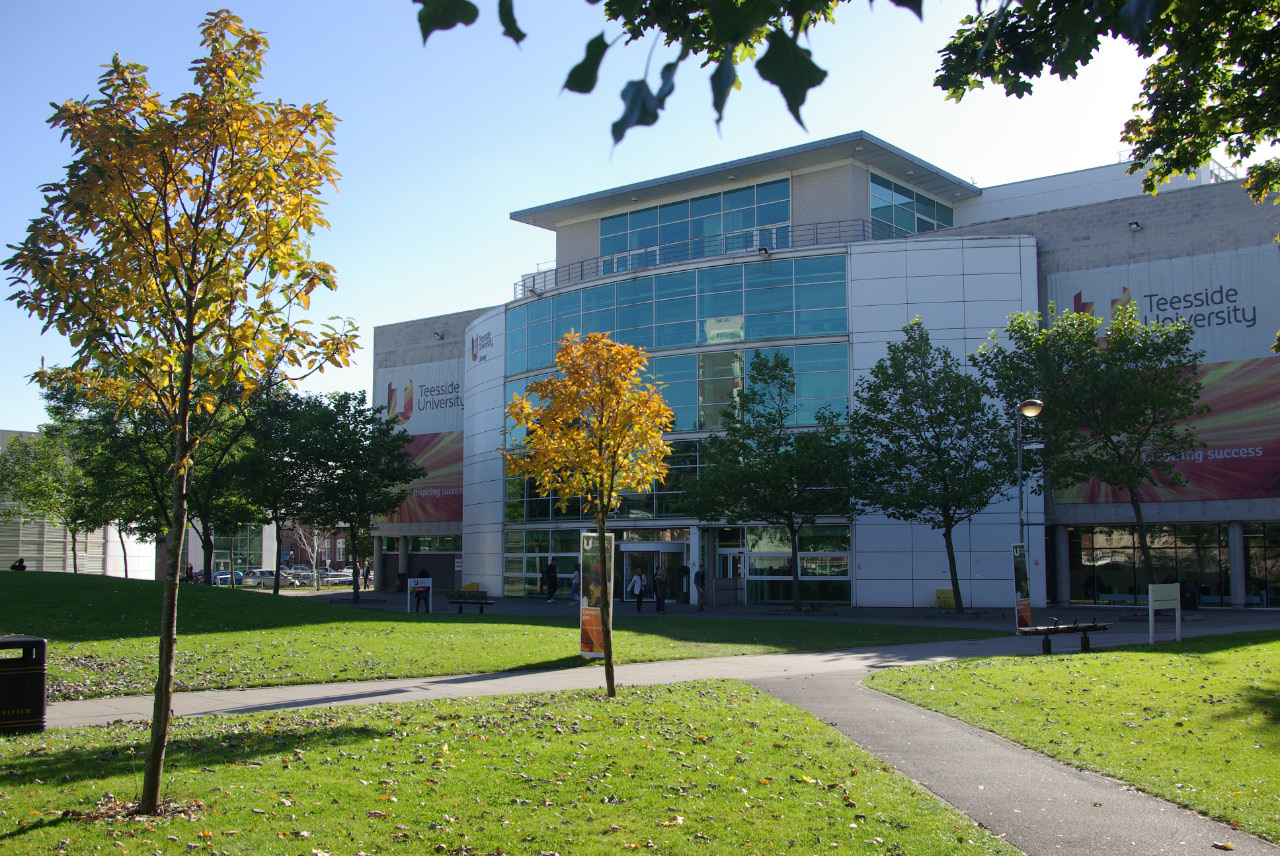
A Generic university building on the University of Teesside campus
(Teesside University Library by Stephen McKay) 

I was invited to Teesside Uni the other day to run a workshop on various aspects to do with play, to a mix of librarians and a few other people from other student support services.

The brief was a tad longer than I like, they wanted me to cover lots of slightly different things related to play at work / in teaching / etc., so slightly less focussed and playful than I'd like to run a workshop, but there was an important point raised by someone there which might have still come up in a more focussed workshop, I'm not sure...

The boss of their service wants more play in everyone's work and explicitly says so, throughout the workshop I tried to push the idea of play and playfulness (rather than games) so it can run through lots of things we do, but still I got the pushback from someone that "of course we wouldn't be able to play at work except in this sort of workshop". 

Because of the quantities of things I was trying to cover, I probably didn't give as many practical examples as I normally do, but even so, I suspect the issue would have come up anyway? I suspect I'm guilty that I know what a playful workplace / teaching session / whatever looks like when I see it, but bad at explaining that to other people - I will tend to assume too much that when I explain what play is, then other people can see it.

The person saying they wouldn't be able to play was thinking of play in terms of a little exercise they did where they played with a balloon elsewhere on campus. Not in terms of approaching work with a playful mindset, so it can (at times) become play. I hadn't clearly enough explained that idea (even though I'd tried!). Someone else in the room (really helpfully!) had described how they sometimes have meetings they play about flicking elastic bands at each other during the meeting - I'm not recommending others do this, but it's a way they found of bringing play into an otherwise un-playful meeting which works for them. 

So flicking elastic bands around for the sake of it = no, of course that isn't work.

Flicking elastic bands around because it improves a meeting = yes, as long as it suits everyone there, it's work.

I think in future I need more of this in any workshop, explaining concepts is fine, giving examples is fine, but I think I probably also need that sort of comparison too. Trying to explain that when I talk about playful work environments there is an extra layer of the employer also being a stakeholder in the game - as long as they are getting something out of it as well as the direct players, then it's probably fine, but that line of "usefulness" is probably constantly moving, much as the potential players capacity and ability to play is constantly changing too. So back to playing around with a balloon - most of the time I wouldn't expect that to be part of work, but it might sometimes be? If everyone is frazzled and needs 5 minutes moving around before coming back more refreshed and productive, it's probably a good playful work thing. (I might take one into my office next week actually, to see if knocking it around every time the motion sensitive lights switch off!) But going out as a group for an hour each day to pass a balloon around, that probably isn't a good use of work time. I need to spend some more time in any workshop trying to get people to think about that moveable boundary of ok / not ok work play, as well as some of the subtleties of what play at work actually looks like.

Wednesday, 25 May 2022

The core of Playful Leadership?

The word leadership with tiny construction workers in from of it.
Photo from https://foto.wuestenigel.com/the-word-leadership-with-construction-workers-on-white-background/ under a CC-BY licence 

I think I’m finally starting to get my head around what I mean when I think of “Playful Leadership”*.

First of all, it’s not about playing ourselves as “leaders”, it’s not about making others play either, but more about setting environments, structures, enablers, that mean that other people are free to feel more playful, so that play may emerge naturally in them, when it makes sense to do so. A working definition for me (which will change over time, I’m sure!) might be:

Playful Leadership is not primarily playing ourselves, but growing playfulness in others.

We can play of course, but I'd say it doesn't have to be the centre of what we do - the important bit is enabling play to emerge in others, the focus is on them, not ourselves. Not everything we do needs to include aspects of play, but I think it’s important that what we do doesn’t kill play. We don’t need to create games or play activities that our teams, or followers, or employees are encouraged to do, we need to enable play to emerge and encourage it to flourish. So it’s definitely not about what a friend (Hi Mathias!) called “Playwashing”, which at it’s worst might drag employees to social events, or promote companies as playful because they have a table tennis table in reception, while expecting them to work ridiculously long hours, try to meet unrealistic targets, and be vulnerable to being fired if they disagree with the boss. It’s more about creating places of psychological safety, teams where you can trust your colleagues and boss, where you can experiment and fail safely, be creative, play to your strengths, be silly at times, have fun, feel like you (as part of a team) have strong elements of control over your work, and generally be in a place where play will naturally tend to emerge (and be valued).

There are probably 3 areas to think about around Playful Leadership.

The first area covers types of playful behaviours that emerge in a team that bring the sort of benefits that we’d expect (increased creativity, better productivity, better mental health, etc., etc.) that lots of people have written about. If we expect them to happen, we’ll probably recognise things as play in here, friendly challenges, humour, people going off to a yoga class together, whatever play the team feels happy with emerging that we can recognise, support, help to grow… but probably not initiate too many of them.

The second area are things we can do that help that playfulness to emerge in teams – which might not look like play in themselves. Things like helping make shared team values explicit (and acted on), setting clear boundaries (this is what the organisation expects, so use those as “constraints” to work within), making physical and virtual workspaces conducive to great teambuilding / working. Sometimes these things will look like the opposite of play (e.g. dealing with “underperformance”), but as long as they are done in a positive, enabling way, they aren’t – e.g. NOT having frank, serious discussions with a member of staff who is letting the team down in some way would damage playfulness.

The third area are things that are explicitly anti-play – disablers, rather than enablers. We should avoid doing them, but probably also need to watch out for them and to try and protect our teams from them as much as we can. Bullying, controlling behaviour, unnecessary secrecy, favouritism (the list could go on…) would tend to kill the environment needed for a team to feel playful, and for us all to feel the benefits that happen when play emerges from that. As a playful leader, as well as avoiding these behaviours ourselves, to some extent we often have to act as a shield from others “anti-play” behaviours, which can make us feel anything but playful ourselves.

I’ll hopefully develop this more in the near future, digging deeper into the 3 areas above, perhaps with examples of what playful leader type behaviour might look like in different situations? I’ll also link it to some more leadership models that are out there already that have aspects of psychological safety, perhaps some elements of playfulness about them too, but which don’t really focus on play or playfulness at their core.


 *It could, I suppose, also be playful management, but “management” tends to have strong implicit aspects of control, of direct line management against targets, etc. I believe there should be a strong leadership aspect to management, but “management” isn’t necessarily leadership. So I’m using “leadership” here, which can include (to me) positive, people-centred management, but isn’t exclusively that.

Friday, 20 May 2022

Playful leadership and performance issues

 Just a quick, half formed idea…

How do we deal with performance issues with staff if we’re trying to be a playful leader or manager? Can we be playful?

This could be seen as boundary setting, defining the edges of the magic circle, the constraints, the rules that everyone agrees to, that then allows play to happen elsewhere.

It doesn’t have to be unplayful to tell people they aren’t performing how we’d like, it can be this that ALLOWS play to continue rather than being stopped by the person who doesn’t do what the team wants or expects?  As long as they operate within a playful environment to ‘improve’, then it fits the overal playful approach perhaps?

It might even be that pointing out the rules, the expectations of other players, help people to realise that they’d be better off playing elsewhere, and that should be seen as fine too? We shouldn’t have to desire playing with the same group of people all the time, and as long as people are supported, it’s fine for some to want to go and work elsewhere with a new bunch of players, as long as it’s a positive choice, not a negative one?

EDITED from here on...

I'm aware this is very vague, so I've added a quick video below that might confuse things even more, but probably suggests where I'm going with any playful leadership model. 

1) An environment / community / workplace where we're doing very obviously playful things and you can see play happening.

2) A set of behaviours that we should be avoiding as they are antithetical to play

3) What I was trying to say above, which is a set of behaviours and tools that don't look like play, but are required in our toolkit to support the play in happening.

Which I (probably quite confusingly) show in the video below using paper, a sharpies, some playpeople, all together showing the boat of play (1) being hammered by bad weather (2) and supported by a body of water / behaviours (3).


Wednesday, 27 April 2022

Changing Signature Pedagogies for IL, LILAC Talk Summary

 So... lots of waffle in the last few posts about the talk I gave at LILAC recently! I'll try and pull it all together here.

I talked about Signature Pedagogies (a quick summary of what they are) and how I think we had quite a poor one in IL instruction - I saw the same things cropping up in lots of different places, which didn't really match what I felt about information literacy, or about why / how we should teach. But a lot of consistency in what I did see, so we probably had a vague signature pedagogy for people who taught information skills in libraries. More recently I think  that's been changing, but very slowly and patchily - as newer definitions of IL have been accepted, as ideas like critical librarianship have become more mainstream, I think a newer signature pedagogy is probably developing, but I'm not really sure. I don't think it helps that when we go to conferences, webinars, etc., there is a lot of surface level things going on - people show how they teach, tools they might use, a particular approach that worked for them, and people copy that. Occasionally people talk about values, beliefs about teaching and learning, etc., but less so than the "surface level" stuff. Rarely do the two explicitly mix, where we say "I teach like this, because I believe in that". So we get a bit of the deeper level stuff spreading through librarianship, but much more of the "oh, a shiny thing to try" that doesn't get past the surface level - so you get a disconnect between how people teach and what they are really trying to achieve, which is why I suspect it's taking a while to shift to that "newer" signature pedagogy I'm seeing bits of these days.

[This sentence edited to link to slides on LILAC archive page] My slides are now on the LILAC archive pages, along with all the other presentations, etc., from the conference.

It was only a 20 minute talk, but I asked a few questions during my talk. I found it interesting that the things people say were important in what they were trying to achieve in their teaching was a mix of very practical, skills based stuff, as well as what I think we're probably moving towards, of things like "critical thinking". So maybe we are part-way between two ideas of what we're there for at the moment? Are we there to impart a few basic skills (how to find stuff?) that are "absolute" in some way, or is what we are doing more uncertain, more contextual to the learner, about helping them to be the best they can through questioning, through critical thinking, etc? 

It was interesting that people struggled to link what they were trying to achieve to their acts of teaching, which reinforces my suspicion that one of the brakes on a new signature pedagogy emerging is that people just don't have the time, space, or support to reflect upon their values and how they come out in their teaching. 

Finally, when I asked people to think about what we could do as a profession to address these things, we got a set of suggestions that seem to support each other - suggesting that perhaps some sort of national peer support / community of practice could help one to emerge. That might be through a course / reflection, or a reflective portfolio, or something else, but somewhere where we could have non-judgemental, supportive discussions, especially around the "difficult" questions that we've not addressed properly as a profession previously.

I have pondered running courses in teaching for librarians previously (I've done 1 day things, especially on particular approaches to teaching, but nothing more broad brush), but perhaps now is the time to think about something bigger? Maybe linked to an ongoing community of practice and peer support for a reflective portfolio? Preferably through ILG, but it doesn't need to be I suppose.

Changing Signature Pedagogies for IL, LILAC Talk part 3

 The final exercise I gave people was in the final minute or two of the session, plus it was a hard question, so only got a few answers back. I essentially asked, "so what do we do next?" How do we have broader conversations to help shift to a newer signature pedagogy (I think we're part-way between an old and new way), how do we bring people to more consistent understandings, to reflect upon these things, etc?

A real mix of answers, from "We need to stop looking inward", "I'm not sure how much we can move" (talking about a particular context), but I'll extract / paraphrase a few concrete suggestions below:

  • We need awkward conversations addressing the many things that we have ignored previously (especially inclusiveness / neurodivergence)
  • National teaching qualification for librarians / community of practice
  • Examples of how this might look / a shared framework from ILG as a starting point (from two people)
  • Creating a reflective portfolio and safe peer review
  • Encourage people to be comfortable with not having all the answers, uncertainty, complexity & ambiguity are fine
Could probably combine these suggestions into 1 - a "chartership" type thing for infolit peeps? Not as a gatekeeping thing, but supportive via reflective portfolio with lots of examples / community support? This could be linked to a short course on learning theories, different pedagogical approaches, etc., that helps people reflect upon their own values, those of librarianship in general, and how they meet teaching and learning? Perhaps focussing on those areas that we've traditionally been a bit rubbish at, but see as valuable? It's certainly something that would be do-able in some form.

One more post to come after this, trying to sum it all up and linking to my actual talk!

Changing Signature Pedagogies for IL, LILAC Talk part 2

Continuing on from part 1, the next thing I asked participants in my talk was how the "things they are trying to achieve" actually manifested in their teaching - what "acts of teaching" linked to those aims.
This was really interesting to me - I didn't know what to expect as they didn't have long to think about this stuff, or articulate themselves, just a couple of minutes to write down what came to mind first of all.

There was a real mix of things came back! 

Some were really clearly linked "acts of teaching" with their underlying aims of teaching, e.g. "interactive / fun" with "games, quizzes, group work", or "engagement / enjoyment" with "Activities / jokes and humour", or a very self-critical one of "interesting / fun" with "Rambling but disguised as interesting"!

Others had minimal connection between the two or were so vague they could be seen as just saying the same thing again! Comments like "they are implicit in all our learning outcomes and methods" (are they really?), or "positive, equal attitude with learners", "Trying to understand needs" - quite a few people left this section blank too.
 
I know I didn't give people much time, but I found it fascinating how few could quickly link their acts of teaching with what they were trying to achieve, but I think that matches what I found talking to librarians in general about teaching - people pick up those surface level acts of teaching from each other, from colleagues (including re-using each others materials), from staff development / conferences (e.g. a few years ago it felt like the whole profession started using the same polling software over a period of a few months!), without those links to more fundamental reflection on whether or not those acts of teaching worked with their beliefs, values, aims, etc., of their teaching. Some could clearly make those links (e.g. I want fun / interactivity, so I'll use games and quizzes), but they were the minority and it was challenging for most to even articulate how they teach, let alone link that to any underlying beliefs, aims, etc. 

It's reinforced my suspicion that perhaps reflective practice is slowly sneaking into librarianship, but what we could do with is something more like reflexive practice? Getting people to clearly articulate what their underlying values and assumptions are (what they are trying to achieve in my quick and dirty question) then reflect upon how well their teaching meets that, rather than how a particular session went - sort of a level deeper, including values / broader things?

Changing Signature Pedagogies for IL, LILAC Talk part 1

 I gave a talk at the LILAC conference recently and asked a few questions of the participants in my short session, so I'll try and do a few posts that summarise some of the things from it. I'll post my slides, etc, later (as there might be a video later, so I'll wait for that just in case), but this first post sums up the first question I asked participants, "Write 3 words or short phrases that describe what you are trying to achieve with your teaching". This is in the context of a talk about signature pedagogies and how I felt that if there was a "Librarians teaching information literacy" type signature pedagogy that I think it's in flux between an old "tell 'em what buttons to click / turn them into mini-librarians" approach to one much more based on critical IL and supporting growth in various ways.

So I got a loooong list of words and phrases (I'll list them all below), but interestingly, if I try and group them, my top 3 groups are: 

  •  “Information access” (search, find, usefulness of, etc info sources) - 10
  •  Criticality – 10 
  •  Confidence building (fear / comfort / etc) – 7 

So the "traditional" things that people see as most important such as information access, are balanced by things like critical thinking. Coming closely up the list though are people talking about a desire to be as inclusive as possible in their teaching, to bring curiosity and exploration to the front, and a hope that they can make any learning transferable to their learners studies / work. I might try to theme these properly at some point, but I'm aware that this was a very quick exercise in a 20 minute talk, so don't want to read too much into it!

Something else that was really interesting to me is that certain people had a clear set of things they were trying to achieve, around the learner themselves, rather than about any particular knowledge. People centring transformation, empowerment, kindness, etc., in a way that I think is growing and that we should encourage more. I'll come back to this when I've summed up the other feedback, plus my talk, so I've not finished yet :-)

Oh, and whoever wrote "Dismantling oppressive structures", I love you, let's work out how to get that front and centre in more people's underlying aims... though it's a bit upsetting that more didn't say similar things!

Friday, 15 April 2022

Game-based Learning for Information Literacy Teaching

I'm a bit slow posting this, but I gave a (webinar) talk back in Feb about play / playful learning in libraries, which was recorded. You can find all 3 talks (me, Sarah Pavey, Rosie Jones) on this YouTube video.


Friday, 10 September 2021

Capitalism vs Play / Control vs Anarchy


Anarchy symbol, which is the letter A and a circle through it.
(Image from https://www.flickr.com/photos/waltjabsco/5021267612 under CC-BY-NC-ND licence)

This post may be even more incoherent and rambling than normal, but I wanted to stick down a few thoughts that I may tidy up and extend at some point in the future!

I was partway through reading Rejuvenile by Christopher Noxon recently - this isn't a reflection on that book, but something it made me think about btw! There are plenty of examples he gives in that book about adults acting in "child-like" (not necessarily "childish") ways that are presented as though play is more acceptable in adulthood now - in all sorts of ways. I've also seen / read other stuff over the last few years that claims that play is now much more acceptable for adults. We can play on skateboards, collect toys, build Lego models, etc., that are often presented as "look, adults are allowed to play". 

But I've my doubts about the sort of examples that are thrown about to claim this, which made me think about what sort of play is really seen as "acceptable" and what isn't. About why adults generally aren't allowed to be playful in modern Western societies. (I know there is stuff about this in some classic play texts I'll have to go back to, just throwing a few ideas down here for myself!)

I've a hunch that the types of play that are generally seen as acceptable are fairly narrow - it's fine for adults to have hobbies that are fairly discrete in time and space (you can do it after work? Without scaring the neighbours?). It's fine for adults to play in ways that make them effective consumers (have you seen the price of Lego sets?!). It's fine for adults to do organised, controlled activities (clubs, sports, etc.). But if you aren't being a good capitalist consumer, if you are allowing playfulness to leak into other things, if you are making up your own rules about things (like a good player does), then those sorts of play are completely unacceptable.

Play in adults is generally allowed when it reinforces, or at least fits within, the rules set by those in power. It may even be encouraged when it results in increased profits and consumption. But I don't think playfulness is any more acceptable than it has ever been - we still need to be good worker drones 9-5, and a change in attitude could impact that. I don't think improvisational play is really encouraged - after all, if you start to play with whatever is around you, how will they fill those shipping containers with goods and keep the rich in the manner in which they've become accustomed? 

Is free / improvisational / creative play more aligned with anarchy than Capitalist societies would like? If you have a playful approach to the world, prone to changing the rules to suit yourself and your communities, is this inherently anarchist in approach? Bernie De Koven used to talk about changing the game to suit the players, this is the opposite to the way power works in countries like the UK, surely, where the powerful few set the rules of the game (and sell us the kit to play it too) - they want to force us all to play the game their way. So is any attitude that puts power (however small) in the hands of otherwise powerless individuals a threat to profits, to control? Is playfulness inherently anarchist in approach, which is why it's so disapproved of in adults, and stamped out in children as quickly as possible?

So games, hobbies, sports, etc are perhaps more acceptable in adults, as they are controlled, they are selling opportunities, they are neat and contained. Freer, more imaginative play, or even worse, a playful attitude are too much of a threat to control, to profit, to power. Games / hobbies / sports are "nice" capitalist ways of behaving. Playfulness is scary, anarchist, and seen as "wrong" by those with power... who heavily influence what we all see as the "correct" way of behaving.

So a bit vague and rambling I know, but at some point I'll try and come back to this and maybe write something a bit more serious on playfulness, anarchy, and why they are unlikely to ever be seen as generally desirable in capitalist society.

Wednesday, 8 September 2021

We Didn't Playtest this at all and Chaos versus Strategy


Logo for the game called We didn't Playtest this at all

Something that pops into my mind every so often was a conversation that happened in a pub a few years ago. It’s niggled me ever since. I’ve never really pinned down why I didn’t just instantly forget it, but it still lives in my brain rent free.

We were playing a relatively lightweight game of some sort and drinking a few beers. It was a  bunch of people interesting in play and games in learning, but still, it was social time and we were enjoying ourselves. Someone started to argue that they didn’t really count the lightweight games (fun, easy to learn, large elements of luck) that we were playing as “proper” games. The only “proper” games were the fairly hardcore “euro” type games (lots of planning / strategy, minimal chance / luck) and the less that chance or luck was involved the better. Their ideal game involved no luck at all, but was purely a test of skill and strategy from the players.

I was playing “We didn’t playtest this at all” with my children the other day, using the “chaos pack” expansion, when I realised why this has niggled me so much. We were working our way through the chaos pack parks and I said something along the lines of “this makes it too complicated and structured – it’s more chaotic without the chaos cards”, which is when the realisation struck. "Playtest" is very chaotic, almost completely luck, very silly, and very fun to to play. It would have been as far away from being a good game as it's possible to be (from that conversation above). But it's the sort of game I really enjoy playing (particularly with my children).

So that person in the pub was defining "proper" games as more like competitive sport than free play - if you've practiced (trained?), are the "best" player, you should always win. It's no fun if anyone could win just through luck. "Playtest" is the opposite - it doesn't matter how much you practice it, you are unlikely to increase your chances of winning (unless you keep hold of a banana - apparantly zombies HATE bananas). So the "structured" game itself isn't particularly important - it just acts as a vehicle for silliness and the comedy of the text and activities on the cards. So it's really just acting as a nudge, a prompt, a permission slip to be more playful. The game isn't important, it's the way it facilitates play that is the point of it.

So, I suppose that's a long rambling way of reflecting that some people see the structures of games and becoming skilled at them as really important - like becoming competitive at a sport. Some of us see the way games give us a structure to hide behind as more important, so it gives us permission to play. Most people are probably somewhere in between the two extremes. But there is no real right answer to how games (including learning games) should work - whether they depend on us building skills, or just enabling different behaviours. What matters is what the players want to get out of it, and for learning games, what the instructor wants to enable.