Showing posts with label play. Show all posts

Thursday, 16 February 2023

Repairing Play: A Black Phenomenology and some reflections


Front cover of the book entitled Repairing Play
Just finished reading "Repairing Play" by Aaron Trammell and I have thoughts! I agree with much that Aaron writes, but disagree with a bit too, which is fair enough... really enjoyed reading it!

More importantly to me, I wonder if the stuff I disagree with comes down to our definitions of play, partly because of my different experiences of play as an autistic person, which is different again to some "mainstream" play theorists?

I have to note as well that the author takes a very US centric approach to this book, which I've tried to forgive, but is undoubtedly niggling me anyway (though he does briefly acknowledge this, so bonus points for this).

So... onto my proper thoughts...

A core part of the book argues that play can be non-consensual, a conflict with traditional play theorists, who say it is always consensual / voluntary. So he says that bullying, torture, police brutality should all count as play... whereas most play theorists would say that they are not. He argues that play is overwhelmingly seen as positive, but it should equally be seen as potentially negative. 

I wonder is this is where I bring my own experiences in a way that is different again? Maybe this is an autistic thing and neurotypical people have a 3rd way that Aaron sees as the norm in play theory?

He counts play as an act that is possible to do to someone else, so the tortured and torturer are playing, the bullied and the bully. I think that he's saying that normally we wouldn't class things like torture as play, but that we should do. I've always seen it slightly differently - the torturer, the bully, the toxic manager, the brutal police officer, can absolutely be playing. Playing as an individual, or as part of a group (that deliberately excludes others), but the person involuntarily suffering as part of it is definitely not playing - to be playing they'd have to be voluntarily taking part, so for example, BDSM would count, but not being involuntarily tortured!

Is this because I'm comfortable that in any activity I recognise that some people may well be playing, some just going through the motions? That the mental state is as important as what is happening at face value? (Or perhaps it's because Aaron comes from game studies, so the game, the structure is the key thing, so can be done to others? I don't know...)

Equally I might be playing in my own head, approaching an activity in a way that makes it play, with others being completely unaware of others - play is much more likely to be an individual activity for me, though the idea that play is inherently social pops up all the time in the play literature.

So this different way of thinking about play is where I think we differ - I wonder if just as his way of thinking about play is heavily influenced by a mixture of game studies and US Black history (and current experiences), so is mine influenced by Autistic play, even though I haven't really thought about it in this way before!

I know this doesn't get onto his idea of repairing play and is probably a bit of a side issue, but it made me wonder about something quite different to the ideas he covers in the book - whether the autistic experience of play is something else again, which I found quite interesting personally! So where I've read between the lines of traditional play theories and assumed one thing (based on my own experiences of play), other people are taking quite a different set of assumptions from it - which Aaron has flagged up by taking a third :)

I really need to find time to dig into neurodivergent ideas of play in adults at some point! Rather than people writing about children's play, which always feels to me like "how do we use play to fix these children" :-S

Friday, 10 September 2021

Capitalism vs Play / Control vs Anarchy


Anarchy symbol, which is the letter A and a circle through it.
(Image from https://www.flickr.com/photos/waltjabsco/5021267612 under CC-BY-NC-ND licence)

This post may be even more incoherent and rambling than normal, but I wanted to stick down a few thoughts that I may tidy up and extend at some point in the future!

I was partway through reading Rejuvenile by Christopher Noxon recently - this isn't a reflection on that book, but something it made me think about btw! There are plenty of examples he gives in that book about adults acting in "child-like" (not necessarily "childish") ways that are presented as though play is more acceptable in adulthood now - in all sorts of ways. I've also seen / read other stuff over the last few years that claims that play is now much more acceptable for adults. We can play on skateboards, collect toys, build Lego models, etc., that are often presented as "look, adults are allowed to play". 

But I've my doubts about the sort of examples that are thrown about to claim this, which made me think about what sort of play is really seen as "acceptable" and what isn't. About why adults generally aren't allowed to be playful in modern Western societies. (I know there is stuff about this in some classic play texts I'll have to go back to, just throwing a few ideas down here for myself!)

I've a hunch that the types of play that are generally seen as acceptable are fairly narrow - it's fine for adults to have hobbies that are fairly discrete in time and space (you can do it after work? Without scaring the neighbours?). It's fine for adults to play in ways that make them effective consumers (have you seen the price of Lego sets?!). It's fine for adults to do organised, controlled activities (clubs, sports, etc.). But if you aren't being a good capitalist consumer, if you are allowing playfulness to leak into other things, if you are making up your own rules about things (like a good player does), then those sorts of play are completely unacceptable.

Play in adults is generally allowed when it reinforces, or at least fits within, the rules set by those in power. It may even be encouraged when it results in increased profits and consumption. But I don't think playfulness is any more acceptable than it has ever been - we still need to be good worker drones 9-5, and a change in attitude could impact that. I don't think improvisational play is really encouraged - after all, if you start to play with whatever is around you, how will they fill those shipping containers with goods and keep the rich in the manner in which they've become accustomed? 

Is free / improvisational / creative play more aligned with anarchy than Capitalist societies would like? If you have a playful approach to the world, prone to changing the rules to suit yourself and your communities, is this inherently anarchist in approach? Bernie De Koven used to talk about changing the game to suit the players, this is the opposite to the way power works in countries like the UK, surely, where the powerful few set the rules of the game (and sell us the kit to play it too) - they want to force us all to play the game their way. So is any attitude that puts power (however small) in the hands of otherwise powerless individuals a threat to profits, to control? Is playfulness inherently anarchist in approach, which is why it's so disapproved of in adults, and stamped out in children as quickly as possible?

So games, hobbies, sports, etc are perhaps more acceptable in adults, as they are controlled, they are selling opportunities, they are neat and contained. Freer, more imaginative play, or even worse, a playful attitude are too much of a threat to control, to profit, to power. Games / hobbies / sports are "nice" capitalist ways of behaving. Playfulness is scary, anarchist, and seen as "wrong" by those with power... who heavily influence what we all see as the "correct" way of behaving.

So a bit vague and rambling I know, but at some point I'll try and come back to this and maybe write something a bit more serious on playfulness, anarchy, and why they are unlikely to ever be seen as generally desirable in capitalist society.

Wednesday, 8 September 2021

We Didn't Playtest this at all and Chaos versus Strategy


Logo for the game called We didn't Playtest this at all

Something that pops into my mind every so often was a conversation that happened in a pub a few years ago. It’s niggled me ever since. I’ve never really pinned down why I didn’t just instantly forget it, but it still lives in my brain rent free.

We were playing a relatively lightweight game of some sort and drinking a few beers. It was a  bunch of people interesting in play and games in learning, but still, it was social time and we were enjoying ourselves. Someone started to argue that they didn’t really count the lightweight games (fun, easy to learn, large elements of luck) that we were playing as “proper” games. The only “proper” games were the fairly hardcore “euro” type games (lots of planning / strategy, minimal chance / luck) and the less that chance or luck was involved the better. Their ideal game involved no luck at all, but was purely a test of skill and strategy from the players.

I was playing “We didn’t playtest this at all” with my children the other day, using the “chaos pack” expansion, when I realised why this has niggled me so much. We were working our way through the chaos pack parks and I said something along the lines of “this makes it too complicated and structured – it’s more chaotic without the chaos cards”, which is when the realisation struck. "Playtest" is very chaotic, almost completely luck, very silly, and very fun to to play. It would have been as far away from being a good game as it's possible to be (from that conversation above). But it's the sort of game I really enjoy playing (particularly with my children).

So that person in the pub was defining "proper" games as more like competitive sport than free play - if you've practiced (trained?), are the "best" player, you should always win. It's no fun if anyone could win just through luck. "Playtest" is the opposite - it doesn't matter how much you practice it, you are unlikely to increase your chances of winning (unless you keep hold of a banana - apparantly zombies HATE bananas). So the "structured" game itself isn't particularly important - it just acts as a vehicle for silliness and the comedy of the text and activities on the cards. So it's really just acting as a nudge, a prompt, a permission slip to be more playful. The game isn't important, it's the way it facilitates play that is the point of it.

So, I suppose that's a long rambling way of reflecting that some people see the structures of games and becoming skilled at them as really important - like becoming competitive at a sport. Some of us see the way games give us a structure to hide behind as more important, so it gives us permission to play. Most people are probably somewhere in between the two extremes. But there is no real right answer to how games (including learning games) should work - whether they depend on us building skills, or just enabling different behaviours. What matters is what the players want to get out of it, and for learning games, what the instructor wants to enable.

Saturday, 12 June 2021

Playful Management, players, and NPCs

Following on from some ponderings about Playful Leadership the other day, and a subtle but important realisation I had... I was thinking about how that came out in my management style and why I sometimes restricted reportees a lot more than at other times.

Most of the time I tend to be quite open and flexible in how I manage people - I give them lots of freedom to do things the way they feel is best. 

In terms of play, I try to set (as clearly as I can), the winning conditions - or at least the end point - of the game.

There are some rules that always exist around the workplace, both explicitly laid out, and implicit in the culture we try to inculcate, but I try to give a lot of flexibility in how they play that game. I try to support them in "winning" (or at least finishing) the game, or the task I've set them, but I'm rarely explicit in how they should do that. 

So I'm often more of a coach and expert advisor than anything else - I try to help people develop the skills to complete tasks in the way that they think is best, pointing out rules of the game they may have missed or mis-interpreted, but rarely telling them what move to make next.

Sometimes, however, I have to interfere a lot more - I have to be very explicit about what they can and can't do, about the approaches they should take to a particular tasks. I wonder if this is when I see the task in certain ways - when the person I manage isn't one of the main characters (even though they may think they are), but more of an NPC. They need to follow a much restricted path than normal, as it's about aiding the main characters arc, not theirs! It's my job as the manager to see these intersecting priorities, tasks, games(!), that are going on and try to make sure that members of our team play the appropriate role. To also see whether they are on a huge group quest, where we need to balance lots of demands, or in a little mini game to the side that is largely just about them.

That's hard on them sometimes - it's my job to have the overview, to see how things fit together, but some people will always see themselves as the main character, never the supporting one, or even the NPC. They can find it hard to see the bigger picture, as it's not really their role to do that, and feel like I'm imposing strange ways of doing things. Worse still, they can feel like I'm too vague sometimes, and too restrictive in others, but not understand why that is. 

They might also feel I'm being unfair when I point out "rules of the game they may have missed or mis-interpreted" (see above), as they are rules they don't recognise, and might not agree with.

I'm not 100% what I've said above in this post is true (for me), I'm just working things out as I type this, but I think there is an element of truth in it at least. This means I probably need to be more explicit in setting out when we set off on tasks and projects, the amount of freedom they have and why. Whether they are the main character, or a supporting one (or even an NPC) - but not using that language of course! 

It's complicated as well by the fact that they can be the main character, freely skipping across the countryside, doing things as they feel is best, and not realise they've stepped into a minefield - they were fine up to that point, but as soon as they've gone into dangerous ground, I need to be more explicit about what they do next. They'll resent this - why shouldn't they skip across the lovely grass? They may object to me telling them the exact path to take next - after all, they haven't been blown up yet! But as the manager, it's up to me to recognise the risks and have the tools to extract us all as safely as possible. Again, I need to consider how I flag these things up effectively, how do I interfere when I need to, without killing the playfulness and freedom that they'll normally have?


Friday, 14 August 2020

Adult Play Network


After pondering this idea for a while, I've just set up a Kickstarter to see if anyone else would genuinely be interested!  

The aim is to fund a network (on MightyNetworks, a commercial platform) of people wanting to bring more play into all aspects of their lives. It will be a social network (so lots of chances to share), as well as regular playful tips and ideas from play experts. 

It will also be a training platform, with play experts able to host courses and events through the network. 

The hope is that the training will provide funding for the platform - but instead of taking a large cut of course fees, a membership fee will be bundled into the course for non-members. So once you've taken one course, or subscribed to the platform seperately, all courses will be discounted by the membership fee.

I'll launch the Kickstarter either 21st or 28th August, but to be informed when it goes live, just click on the "Notify me" button on the upcoming project page.


Thursday, 9 July 2020

Should I set up an Adult Play platform?

I've posted before about the possibility of setting up some sort of "Institute of Adult Play, and I’m expecting I’ll have enough time to do something about it over the next couple of months… if anyone is interested! (If so, please fill out the form.)

I want to create a platform where lots of playful people who work with adults can offer some online training, as well as having a social element so we can share ideas.

There are a few underlying aims:
  1. To try and create some way of creating more paid work for everyone.
  2. To share ideas across a range of different playful people.
  3. To get more people who wouldn’t think of themselves as playful to do some training that brings out their playful sides.
If there is enough interest, I’ll set up a company (possibly “Community Interest Company” in UK?) for everything to go through and launch a Kickstarter to provide initial funding, and more importantly, gauge interest in it before we spend too much money!

I’ve investigated platforms and think I’ve found one that would allow an element of social networking / sharing, plus an integrated online course platform, for a reasonable monthly cost. Courses can be free or paid for. “Membership” of the platform could be paid for too.

So I have in mind:
  • A small membership fee for belonging to the platform (£5 per month? Maybe different levels available?)
  • Some “free” introductory type courses (people would pay a membership fee to access all the free ones).
  • Paid for courses – where the fee (minus processing charges) would go to the course creators (though if people weren’t members, an extra “member” fee would be added on top).
  • Membership fees would go towards the running of the platform, course fees would essentially go to the play community – the course creators.
  • Courses, plus pages within the platform, could also be used to encourage people to book playful experts to run bespoke training, consultancy, events, etc., outside the platform (so acts as a “shop window” for people too).
Would anyone be interested in being (a) a Member for a small fee, (b) A course creator in such a platform?

If so, please put your details in the form – I’ll only use this in relation to the initial set-up of such a platform and will delete all contact details by the end of this year.

Friday, 15 May 2020

Institute of Adult Play ponderings

Sample Logo for an "Institute of Adult Play"
I've pondered for ages ways of encouraging / creating more work in the field of play and adults for myself and some friends. Something that could pull opportunities for us together and enable those that want to escape from their existing jobs, or to gradually do so at least. Some of them joke about setting up a fun-versity or play-versity as an antidote to their work at universities. But what about something smaller? So I was pondering some options...

Sample Logo (2) for an "Institute of Adult Play"

How about something that is a cross between a provider of training and a social / professional network for adult play people? An "Institute of Adult Play"?
There are such a wide range of people who work with play and adults, so the first thing it would do is pull people together - provide a platform for cross fertilisation of ideas, for sharing opportunities for work, and to generally share stuff amongst themselves.
The second thing would be to provide training - partly training for those play professionals, but also a way of providing training to the wider public / organisations. Members of the "institute" could provide training on a shared online platform (which spreads out the costs of providing it) as well as linking to training where we have to be physically present (when we can eventually do so again!)- hopefully that would mean people would do one course, then come back to do someone else's, increasing the work for all of us.

Sample Logo (3) for an "Institute of Adult Play" 
It would probably be a not for profit type membership organisation - with members paying a monthly or yearly fee (£5 a month maybe?!) which would let us pay for a membership platform with a virtual learning environment built in. Some of these platforms let you charge for membership, plus have the choice to charge for courses or offer them free for different membership levels, so could let people develop their own course(s) on the platform which we'd pay out for when people booked on the course. Or dish out the membership fee dependant on how many people had done each course? Or some other way of spreading the money!

This would be really risky to set-up. It'd need a small amount of seed money to set up as a company (maybe a Community Interest Company - a type of social enterprise?), but a much larger amount to run a platform / network.
Sample Logo (4) for an "Institute of Adult Play"
So I pondered a Kickstarter? If we risked a small amount of money to set up a business, it could be done in a way that it only started trading if the Kickstarter was successful, otherwise just got closed down again before it actually did anything. The Kickstarter would be a way of getting enough money to run the platform for a year, plus gauging if enough people were interested in becoming members to be worthwhile!

So... does this all sound completely ridiculous, or does it sound amazing and you'd all like to be directors and founder members? Should we take a gamble and try and set something up? Would anyone like to play along in running something like this? Let me know (preferably via Twitter...) @PlayBrarian with the somewhat long #tag of #InstituteOfAdultPlay

Monday, 23 March 2020

Play in HE zine 7

two zines on a table
We're up to zine #7 (out of a theoretical 10) posted out now, with the latest one being a special pandemic in HE edition... I'm not sure what will happen with the final 3 as they were meant to be produced and sent out over the next few months, which is likely to be peak time for the pandemic.

I'm also working from home, so expecting my paper and printer ink to last long enough to create about 250 copies of zines (plus extra bits and bats) might be pushing it to say the least... and I don't really want to be getting extra supplies in during peak pandemic!

So I might have to do just one print copy (the final one?) and a couple of electronic only versions? I'm not yet sure...

Anyway, the first 7 are all on the OneHE foundation pages for members (as they provided a small grant for the project). I still intend pulling the content together and sharing it for anyone else, but not until the end, which should be this summer at some point!

Friday, 13 December 2019

Online course on play in adulthood

Screenshot of the front page of an online course, theories of play in adulthood
I've been pondering (for a while!) what we could do as a course in adult play - something that covered a bit of theory to help people come from the same place, but also included practical elements and reflection to link theory to practice.

One thing I thought might work is either an online course, or perhaps a blended approach but mainly online. So as a first step I've created a short (should take just under 1 hour!) online module / course that really briefly intoduced some play scholars and called it "Theories of Play in Adulthood". It's a mix of short (and simple) videos and some textual content.

You can access it here: https://coursecraft.net/courses/z9ZyR 

I thought this might act as a starting point, then other online modules could contain more practical advice (but linking back to theories) and be slightly longer, especially as they'd include activities to complete (the first one is just reading / watching vids). So maybe have:
  • Theories of play (about 1 hour long)
  • Enabling play (Short bit of theory / reading, then tips, examples, and practical exercises)
  • Playful training approaches (Short bit of theory / reading, then tips, examples, and practical exercises)
  • Playful leadership approaches (Short bit of theory / reading, then tips, examples, and practical exercises)
  • Any others?
If people were up for it, these could then be combined with some form of assessment. So a small charge for each module, but do "Theories of play", "Enabling play", plus one other module and people could submit a creative, practical, playful assessment for marking (for an extra charge), which would result in feedback and a certificate of some sort - preferably together with a "sharing" day where people completing the course would share what they've done.

So does anyone want to do the really short theory one and let me know if they think I should create a full course (3 modules for starters?). Plus I'd also extend the first theory one slightly once a few people have done it - think it's a bit too brief at the moment! At the end of this first module I've put a few questions to gauge interest and ask about content, etc. I'll then ponder whether to do an actual "proper" course with multiple modules...

Thursday, 3 October 2019

Aalborg workshop


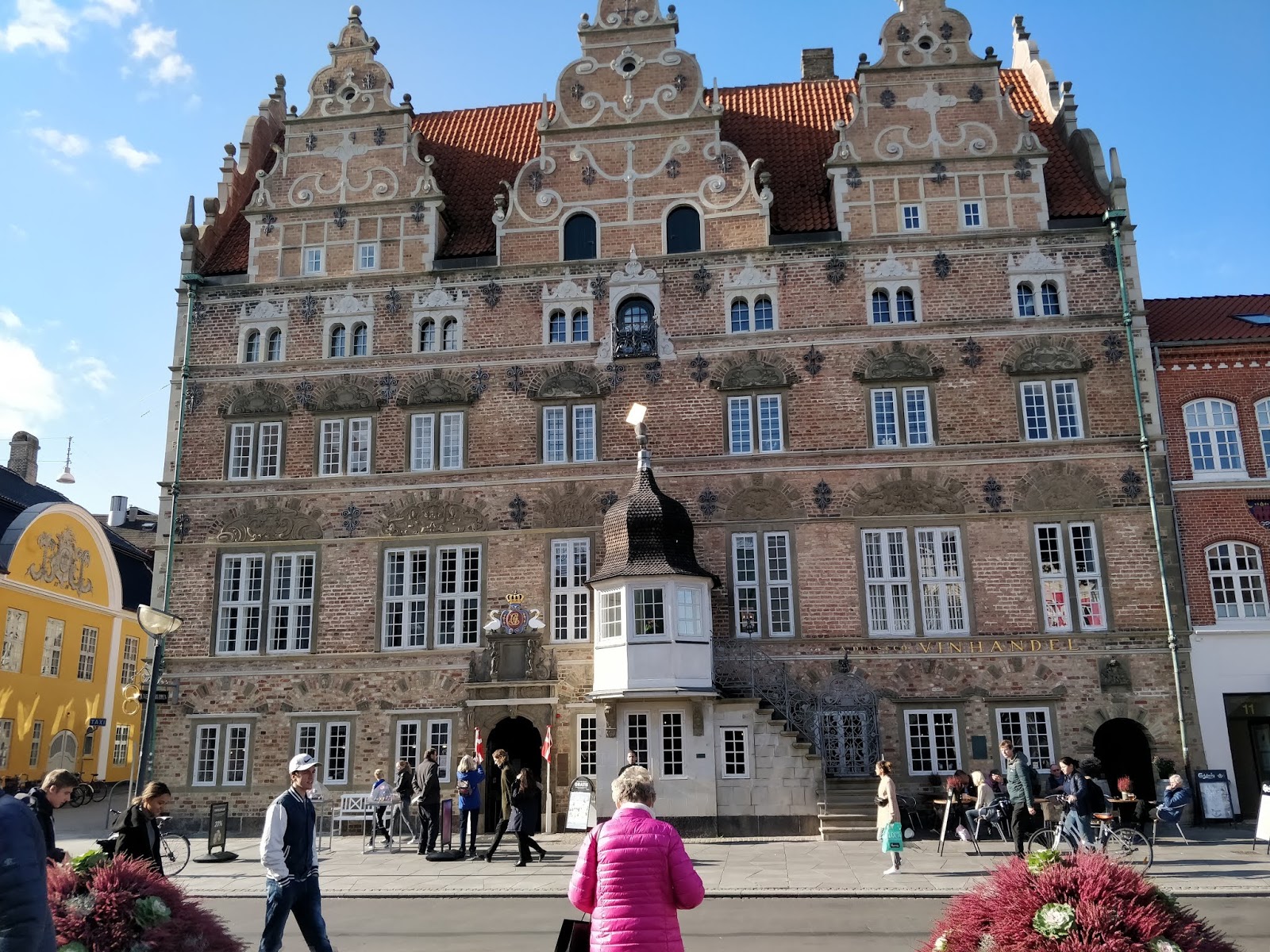
I had a lovely (though brief) visit to Aalborg to deliver a workshop for FLIP'D today (not in the lovely looking building in the image, but in the very impressive NordKraft). I'm glad I managed a couple of hours wandering around too - I love an "explore" of somewhere new to me :)

I talked a little about play, games, library teaching, permission to play, and we carried out a few activities too - thank you to everyone for taking part! I used more slides, with more text, than normal mainly so I could upload them somewhere for reference - they are now on Slideshare (plus the organisers will share them with attendees directly).

I mentioned the Journal of Play in Adulthood at the start, as someone asked me about it, I'll share a link to that! It's an Open Access peer-reviewed journal (no charges to read or publish in), I'd love anyone using play with adults to consider publishing their work in it :) https://www.journalofplayinadulthood.org.uk/  My article on "Permission to Play" in this journal goes into much more detail around the issues we used the "chatterbox" (flip / flop?) to discuss. 

I also mentioned the fantasic Counterplay Conference / Festival organised by Mathias Poulsen - hopefully he's now organising these every 2 years at Dokk1 in Aarhus. I tend to feel that the short video I tried to share at the end sums it up nicely - the giant cardboard rabbit that hops up to the clown (watch the vid!) is responsible for the most surreal experience I've ever had at a conference. A room full of people sat watching a cardboard rabbit hop to the front to deliver a plenary session and everyone accepted it as a perfectly normal thing to happen :)

Apparantly some of the links in my book for librarians using play are broken, I'll try and check through it over the next few days and add links below if I can find and fix any. The one that was specifically mentioned to me was SEEK! (A simple card game for search skills) - that should be on my institutional repository to download / adapt / print for free.


(Note - I might edit this later to add a few more links.)

Monday, 23 September 2019

First few zines

Chatterbox for Zine #3
I've now sent out the first 3 zines covering some definitions of games and play, plus one on giving "permission to play". They've all had extra materials in the envelopes such as the chatterbox shown in the image above.

I'm putting them on the OneHE website, which is only accessible for members of that organisation, so I'll pop them somewhere else too at some point (and link to them from this blog) as it'll be nice to have them more widely available too. Not sure where it makes sense to stick a bunch of PDFs though!

Next one will go out at some point in October (not sure exactly when) and will probably be on the "benefits of play in HE"... though I may get distracted and do a different topic entirely :)

Monday, 10 December 2018

A new journal around play and playfulness in adults?

a pile of journal articles
I've been analysing some data recently and started to think about where I might be able to write it up for. What journal would suit something on adult play? There are plenty of digital games type journals, and a few play journals that concentrate on aspects of play in children, there isn't a great deal of choice if you want to publish research on play in adults. There are options, of course, but adult play seems on the periphery of even the best options out there. Add in my fussiness over things being as open access as possible, and that reduced the field even further.

After a bit of whinge on Twitter, I seem to have agreed to set up a journal specifically for articles on Adult Play.
Tweets between myself and Mathia Poulsen
I've pulled a proposal together and sent it to the University of Huddersfield Press to consider... so in the next few weeks I should know what they think and either go ahead with them or another (uni?) press.

There has been an overwhelmingly positive response from interested people and I have loads of people offering to be on the board / reviewers, as well as interest in writing for it. So (fingers crossed), early in 2019 I should be able to start firming up a new journal and putting out the first call for papers - perhaps with the first papers being published late Spring, early summer 2019?

Whatever happens, my intention is the the journal to be fully open access (including "licence to publish" rather than assigning copyright to the journal, CC-BY licences), no APCs (charges to authors), primarily double blind peer reviewed (but with a section for less traditionally academic material / formats too), and international in scope.

The name of it is still under discussion (might do another post about that), but will probably be something like the "Journal of Play (or playfulness?) in Adulthood" to make it easy to discover and see at a glance what it is about!

Thursday, 6 September 2018

Permission to play research interviews

Set of goodies from the CounterPlay conference including mask and chatterbox
I've been thinking about the idea of "permission to play" a lot recently, putting some of those early thoughts into a paper for the HEaD conference.

More recently I've been interviewing people who use play with adults about how they use play, trying to dig a little into how they enable people to play, or help to give "permission to play" to them. I've talked to a series of fascination people (15 of them?) and it's been brilliant hearing the amazing range of things happening and the different approaches that people take. It's also wonderful how generous they've been in offering up their time to talk about these things - the play community is full of great people.

As soon as possible I'll be transcribing, analysing, and generally puzzling over all the stuff that people told me about and trying to work it into a journal article (or a short book if I think I can justify it).  I'm sure I'll present it to at least one conference as well, though not 100% sure where (except perhaps Counterplay).

So thank you to everyone I interviewed and watch out for outputs at some point in 2019!

Saturday, 21 July 2018

I've just okayed the final proofs of "The librarians' book on teaching through games and play", so it'll be appearing on bibliographic databases over the next few weeks (already on Amazon!) to pre-order. Officially out on 3rd September, pre-orders should ship pretty much straight away!

At some point after publication I'll update the free / OA first draft version so it's available online as a PDF too.

Friday, 29 June 2018

New (early release) book, The librarians’ book on teaching through games and play

The Librarians' book on teaching through games and play

I've just finished the first draft of a new book, "The librarians’ book on teaching through games and play". It contains lots of materials aimed at librarians and information professionals to use games and play in their teaching.

As an experiment, I'm releasing it in a fairly raw* state. It still needs editing, plus some content is likely to be added over the next couple of months (and some edited out!). Sections may also move around to make more sense. BUT, the content is roughly complete. So take a look please! When the final version is ready it will be released as a print book (aiming for September 2018), but I'll also update the Open Access PDF too.

Please don't save and share this version elsewhere as it will be updated before too long, share the link to this blog, or the repository page instead so people will be able to access the most up to date version!

Full text, including updated files as they become available: https://osf.io/6xhrp/

* Note: This is the “early release” PDF version – it has not yet been edited and some content may still be missing. The final versions (print and PDF) will vary from this early version. 29th June 2018.

Thursday, 28 June 2018

Permission to play and the HEAd conference

Summer hat with conference logo

I went to the HEAd conference in Valencia last week and talked about "Permission to play in Higher Education". It's something I've been thinking about a lot recently, so I'll be doing more on this over the next year or so!

I did a run through beforehand, so if you want to know (roughly) what I said (minus the pass the parcel activity!), watch the video below. I've not done subtitles yet, but the slides are also available including notes, plus the full /formal written paper too.

Monday, 4 June 2018

Video on play and libraries

I did a short presentation today in the form of a video for a lovely bunch of library staff in Lithuania - I think they'll be showing it in June. I talk a bit about play, games, gamification, and some of the playful things I've done over the last few years. If anyone fancies watching it, here you go!


I'm pondering doing a series of short (few minutes long) videos using something a bit funkier than PowerPoint - I might have a go over the summer :-)

Saturday, 26 November 2016

"Sneaky Cards" and the workplace


I've really liked the idea of Sneaky Cards since I first saw them, and I've already planned challenge type cards for attendees at the i2c2 conference next year.
I've also been pondering how to make my Uni workplace more playful and have been trying little bits and pieces.
These two came together last week at the Playful Learning SIG meeting  when we were talking about this sort of stuff... so I've put a proposal to our Senior Management Team in Computing and Library Services (CLS - the bit of the uni I work in), to run with the idea..


Thursday, 1 September 2016

Guardian article on play in Higher Education...


Photo by Jon S, https://www.flickr.com/photos/62693815@N03/ under CC BY 2.0

I had a minor rant about Play in Higher Education recently, and after editing by the Guardian peeps, it got published... not quite what I was trying to say, but close enough for a newspaper!

Walsh, A. (2016, September 1). Think play is for nurseries, not universities? Think again. Guardian Higher Education Network. Retrieved from https://www.theguardian.com/higher-education-network/2016/sep/01/think-play-is-for-nurseries-not-universities-think-again

Tuesday, 24 May 2016

A few random thoughts from Counterplay 16

The most terrible things, war, genocide, and slavery, have resulted not from disobedience, but from obedience.
I haven't written up the Counterplay conference / festival at all, but I've lots of thoughts swirling around my head still from it. I don't think I can write it up like I do some conferences (session x covered y...), so instead I'll just pop down a few "random" thoughts that have stuck with me. I ended up with 3 pages of handwritten short notes / bullet points immediately after the conference, so these aren't everything... and aren't about the conference / festival itself, but a few thoughts about play itself that stuck with me!
I've pulled out 5 from my long list of points I wrote - hopefully they make sense: